Friday, August 09, 2013
3 I'm Not Dead!
Friday, April 19, 2013
8 Anti Terror Protection at the Tour de France
Wednesday, February 27, 2013
9 Brainstorming Bicycle Design Ideas With an Example
Bicycles are a 100+ year old technology. We know that automobile and aviation engineers first tinkered on the bicycle to gain inspiration, or to use it as a stepping stones to a greater technology. Several challenges in bicycle design led to the invention of new technology that were directly transferable to other fields requiring similar solutions. The bicycle has given us the pneumatic tires, roller bearings, crank and linkage mechanisms, chain drives, advancements in metallurgy and construction and much more.
Maybe we shouldn't think that bicycle design has reached a design ceiling. There should still be a good bit of room to explore new solutions to needs and this is where brainstorming comes in. I once wrote a post about "Ideas for New Cycling Products" in 2 parts (see Part 1 and Part 2) and threw out there a dish of new and wild ideas. As long as the ground is fertile for new ideas, there is potential for a market.
One aspect of the psychological inertia to change is perhaps due to the thinking that since the bicycle is an old technology, there is no further need to re-visit old ideas. This is based on the assumption that old ideas never made it because they didn't work out or didn't sell. Take a bet. How wrong could you be?
Sunday, February 24, 2013
4 Effect of Bicycle Chain Wear on Shifting Speed
Apparently, shifting times differences measured with new and worn "10 speed" chains are marginally low to allow for any statistically significant conclusions. So I guess the message is don't fret unnecessarily over your chain length.
Two plots from upshifting and downshifting tests are shown below.
Speaking of chain wear, Wipperman's most conclusive test results on chain wear ranks themselves as number 1 in the list of 10 speed chains, which they attribute to their solid, no frills side plate and solid pins. Link.
Friday, January 18, 2013
3 Armstrong Exposes His Fraud
I got a rare sense of actual delight that hundreds of hours of research , raising arguments and giving the elbow on this issue came to fruition. I believe that good open minded research leads you a point where you can't ignore the rest of the facts, which leads you to further reading and "finding out", which leads to more awareness.
Monday, October 22, 2012
12 Crucifixion and Reform
Sunday, October 14, 2012
12 Felix Baumgartner's Ascend Data Plot
Following up on aeronautics and human performance appears to be a strong past time of mine. I don't have the cajones to do anything like I what I saw today live. But...having nothing interesting to do on a Sunday, I decided to collect 1 min sample data for the point leading up to the jump. The data came from the streamed telemetry on Red Bull's Youtube channel. How much difference that had compared to the actual instruments, I do not know. What is interesting to see is the variation of the outside temperature with altitude (blue line) as it crosses the 50000 ft point. You can also see things like the ascend rate lulling between 40 and 80 minutes and altitude leveling off at 128,000 as the helium was vented and the capsule depressurized to facilitate the jump. What would have been great to check out is how the ground speed varied, as the capsule came into contact with the easterly jet streams at some point.
Saturday, August 25, 2012
9 Lance Armstrong's Story a Case Study in Human Psychology
It is quite fascinating isn't it, that when we step away for a second from the intricacies of this epic doping saga connected to Lance Armstrong, you find larger underlying questions about behavioral psychology - the way we humans operate, why we behave in certain ways and why we choose to believe or not believe in things we come across especially when some form of philanthropy is involved.
Bear with me for a few minutes here and I hope this will lead to some interesting discussion of a more psychological nature.
Ethical People Can Do Unethical Things
There is a fundamental assumption that unethical people do unethical things but that's not always true. Ethical people can do unethical things because they repeatedly fool themselves about the real implications of their transgressions. Slipping into this unethical state is driven by many many factors. In the early races of the 90's, Lance and his team probably knew there was no way to stay in competition and produce the numbers their sponsors were looking for other than to partake in doping. So they doped too.
The real transition came the instant when Lance decided to become the driver of the doping rather than just a participating rider. He allegedly became the self-appointed leader of the Omerta. What led to this behavior? You could say a self confidence he gained from winning races, the fact that he was an American in a long time to hold the Yellow Jersey, maybe the friends he made in the peloton who were also doping that he had to stay friends with. A lot of theories are out there. Forgive me for speculating.
Whats most interesting is the cognitive blind spot people as his fans have towards unethical behavior given that the same person has done a lot of good, both for the sport and for those suffering from cancer. For fans, LA is a symbol and they feel empathy so they want to help his cause out. I can't find any other way to explain why financial contributions to the LAF cancer fund have suddenly jumped 30% in the last few days.
It begs the question : are people actually worried about cancer patients suffering. Or are they worried about Lance Armstrong's financial troubles that come ahead? Are people running out, suddenly contributing to make a statement that they support their hero or are they really concerned where their money is going to and what for? Are the contributions a show of arrogance from his fans that his legitimacy is still valid? You'll never know. But it brings out a great opportunity to talk about psychology.
Thursday, August 23, 2012
20 The End of An Era
Thursday, July 05, 2012
4 Cycling - Worst Olympic Doping Offender?
Findings vs Samples Taken : For cycling, you can see that the number of samples taken has steadily increased over the years. After 2008, the number of findings however decrease.
Similarly, here's one done for Football, Tennis, Athletics, Weightlifting and Baseball. Except for baseball/softball and weightlifting, the other sports have all seen increasing samples taken until 2008, then they have taken a dip. Why this common trend?
Sunday, July 01, 2012
16 Ethics of Strava Usage
You wonder whether these Strava users are throwing all the things we knew about group riding etiquette right out the window? Group rides should be competitive every now and then, no issues there. But Strava users consistently using group rides as a slingshot to attack and get KOM and other what have you is...I mean let's face it...its irritating. The rest of the group, including weaker riders, are left lingering in disarray. These guys should ride on their own if such is their agenda. Lets see them get out on a hot day, without any help from others and achieve the same things they brag about. Bah...
Saturday, June 30, 2012
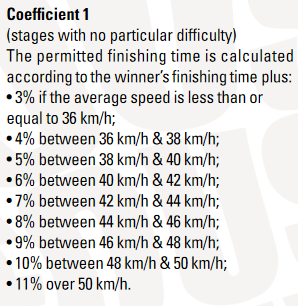
0 Tour de France 2012 : Permitted Stage Finish Times
Hello everyone! Its that time again of the Tour de France, and I for one am quite thrilled by this year's route and the open field we have in 198 riders.
Sunday, January 15, 2012
12 Factors Affecting Bicycle Transmission Efficiency
So I started to think about gear to gear effect on a multi speed road bike, such as one with 30 speeds (3 gears up front, 10 in the back). If one could save a bit of power by choosing the most mechanically efficient gearing, that'd be a relief on a long climb (lesser energy expenditure) and could translate into quicker times.
Most people you talk to about this subject would snap that the well oiled bicycle chain is 98% efficient and the discussion would end there. However, missing from that discussion is several factors that could skew it one way or the other.
One factor may be obvious - chain tension. If the chain is too long for the job, the slack side tension is now more, which will subtract from the tight side tension in the power equation. You wont be riding for a long time this way because there is higher tendency for the chain to 'jump' or skip gears. Efficiency for a given cadence will be lower.
The second factor is the selected gear. When you move away from a single speed setup and loop your chain through a derailleur and a cog containing several sprockets, efficiency is not really constant per se from gear to gear. Some gears happen to be more efficient than others, perhaps because of what you can call lesser system 'restrictions'.
If you picture yourself as a link on the chain and think about the challenge of having to maintain chain tension while bending around big and small gears alike, you'd carry power more easily the lesser you'd have to twist and bend. Atleast that's my theory. I'd like to think that a 11T small cog presents a bigger restriction to chain-link movement than a 17T cog.
Other things are less obvious. What could the effect on drivetrain wear be? I've written about an effect called chordal action when using high gears.
To measure gear to gear efficiency loss with any degree of high accuracy takes a dyno setup, load cells, a data acquisition system and lots of time. Fortunately, Chester Kyle, a mechanical engineering professor at Cal State Long Beach and founding father of IHPVA, did some very relevant work on this stuff back in the day. In Vol 52-2001 of the Human Power magazine, he describes using a single setup, with varying loads to measure efficiency in multiple drivetrain systems including hub gears.
Some of the findings were -
1) Efficiency generally increased with load : As you drive the crank to higher power inputs, the frictional factors eating away at that input becomes a lesser percentage as the input goes up. So frictional effects go up less rapidly. (Ofcourse, we're talking about mechanical efficiency here. If the human body is less efficient at oxygen intake and clearing away lactate at higher loads, there's really no point in trying to hammer away with higher gears. But that's a subject for another day)
2) There is generally a 1-3% difference in efficiency between adjacent gears. Prof. Kyle wrote that "an average of 2% difference in efficiency is thus easily possible if the wrong gears are chosen".
3) The efficiency (for all loads tested) tends to fall with higher gear ratios for all transmission systems tested.
Since I was thinking about my own road bike setup, I was particularly interested in the test he performed on the 27 speed Shimano system. The efficiency curve for this setup looked like this from the study :
Since Prof. Kyle ran out of time, only 15 of the 27 gears were tested.
I constructed the legend of the data points below. Gear ratio, calculated as driven teeth divided by driving teeth, decreases from top to bottom. Smaller gear ratio means "high gear" while the opposite is "low gear". Generally, the former is important if you wanted top speed and the latter would be if you cared for acceleration.
The graph show interesting things and I'd like to highlight a couple that caught my eye:
1) I'm seeing that higher gears and hence lower gear ratios mean you can lose efficiency but some perspective is important here. Between the lowest gear and the highest gears tested in this setup, there's a 1 point drop in average efficiency.
2) The 44/34T gear, which is a big front-big rear cross chained scenario, shows the worst efficiency. Generally, cross chaining is not a good thing so this might be the proof of that.
3) The 44/12T gear, which is a big front-small rear cross chained scenario interestingly shows about the same efficiency at 75 rpm as a 44/26T. Why is this so, given that I said driving a chain around a smaller cog is probably worse for transmission efficiency? No idea. Perhaps its more straight chained than the latter. Moreover, this type of cross chaining shows higher efficiency than a big-front-big rear cross chain.
4) 44/20T shows the highest efficiency of 95%, and if you included the 1-2% in friction loses in Prof. Kyle's study, that translates to 96-97% efficiency.. It must be straight chained as well. Could anyone verify this?
This study is truly interesting and has implications for performance improvement. I wonder if anyone else from another part of the world had a chance to investigate this more. It paves way for some interesting discussion.
CONNECTED READING :
52/12T vs 52/11T Gearing : A Look At Chordal Action
Friday, December 30, 2011
10 Electronically Balanced Bicycles & Unicycles
We're now quite deeply embedded in the Age of Electronics, where smart, sensible electronics in the form of boards, kits, controllers, sensors etc seem to be well within the affordability of average Joe. Has the age of invention really died? I argue not. Did you check next door?
Anyway...there is something existential in seeing a machine able to balance itself, isn't it? Well that's the topic for today.
Some years back while in college, I saw the murata boy riding his bicycle and smirked - that's it, the Japanese are going to take over the world. The motto behind the design effort was 'when you fall off a bicycle, get right back on' and so Murata Manufacturing packed gyro tilt angle sensors, power giving capacitors and other position sensing hardware into the robot to ride a bike. Two wheels.
To give company to the 'male' robot came an agile murata 'girl' and her stance was on one wheel saying 'ha, look at me' and out she came out more looking more heroic than her cousin balancing a unicycle while managing to avoid obstacles.
A video from Hacked Gadgets shows the impressive capabilities of the two creations.
The principles behind these electronics for basic work are not that hard to understand. And for an average guy to get his hands wet in application, you don't have to go far these days. LEGO has for a number of years been marketing the Mindstorms NXT kit which comes with a microprocessor, motors and several sensors to teach you motor control, object detection and so on.
Then if you listened to Cornell prof. Andy Ruina's wise words and had an itch to create, you could take that NXT to the next level :
Elsewhere, people were doing challenging work. The question probably was - could you extend this idea of robot-ism to humans and create a unicycle for propulsion? Dean Kaman's Segway seems to have inspired a string of inventors from all over the world to do exactly that.
The concept would be similar to the Segway - so you would take a chassis and mount an electronic gyroscope capable of measuring vertical angle. If you leaned far forward or back, an electronic motor controller would send a signal to the motor to rev it up or slow down so as to to put the bike back in balance.
The challenge would be to get your filtering right or you'll be leaning forwards and the sluggish machine would toss you off, or there would be introduction of positional errors, gyroscopic "drift" in your system and so on which would also not be good for tracking. Sampling rate is the other thing that's quite important. 100 Hz means sampling every .01 seconds, but on an electric unicycle, is that good enough?
An electrical engineer from Slovenia seemed to have got it right with his Enicycle. Works quite like a Segway and if you wanted to turn left or right, you simply put pressure on the left or right side footrests, then watched where you were going as the 1000 W motor raced the device to 15 kmph. A prototype was featured on the Gadget Show :
Perhaps Honda didn't want to run out of publicity as well and displayed the Honda U3-X, also a personal mobility electric unicycle, to a throng of reporters in Tokyo (2009-ish).
The uninteresting bit was, yeah they had tilt sensors for balance control and so on. What really captivates is the portability of the machine - the bit looks like a sleek boombox and you can haul it around like a pullman. And then came the closely guarded "omnidirectional wheel" in the device.What was that?
A writer for the electronics journal IEEE described the legend of the wheel as such : 'The wheel consists of a ring of small rubber wheels overlapping a single large wheel. When the large wheel rotates, the U3-X moves forward or backward. When the small wheels rotate, the machine moves left or right. And when both the large and small wheels turn at the same time, the U3-X moves diagonally." How does Honda come up with stuff like this?
So here's that video demonstration that Honda did for IEEE reporter in NY. Its a good one.
Focus Designs from Washington was probably inspired by the Enicycle to create something very similar - the SBU (self balancing unicycle). Other than the fact that it costs 1400 cold cash, it can go 12 miles single charge with its 1000W motor and has the capacity for regenerative braking, something I'll have to look more into to assess its potential. (In the past, I wrote a post looking into the regenerative capabilities of MIT's Copenhagen Wheel)
Stephen Boyer, a computer science student at MIT also flexed his creative muscles to see what he can come up with. He validates the fact that anyone these days with decent electronics knowledge can make a forward-backward balancing unicycle. He didn't complete his project since he was unsuccessful at sideways balancing but he's brought some fresh ideas into the picture, like a pressure actuated killswitch that the rider would hold in his hand to kill the machine. Lots more interesting details into the engineering of his "Bullet" and a video of Stephen riding that bike can be found on his blog entry.
Steve Jobs may have passed on with a final look at an iPhone. And Segway's owner J. Heselden may have met his end over a cliff riding a Segway. But these individuals and technologies inspire hundreds of derivative technologies daily. But some part of me wants to see progress from investigative tinkering.
I can't wait for the day when the local pizza joint dishes away with their automobiles and hires a Murata Girl to deliver my pizza. Boy, I think if Google cars can drive around Nevada for 200,000 miles without a single accident, perhaps robots on electric unicycles can do a better job of delivering pizza without fatality. I mean, I do think of how many kittens were killed in the process of getting my pizza, you know.
Happy new year! Here's hoping we see more interesting things in 2012.
RELATED RESOURCES ON THIS BLOG :
Sunday, December 25, 2011
1 Merry Christmas & A Fabulous New Year
Readers,
After I got hired by Cummins to help engineer/integrate their turbochargers to diesel engines earlier this year, I haven't had much time to concentrate on the blogging aspect. I'm still as passionate about cycling as I ever was, infact I try to commute the 6 miles to work in cold temperatures whenever I can. And I try to ride with colleagues from work.
Here's hoping you all have a joyous Christmas and new year. If it weren't for Christmas, we'd all be Jewish right? Na just kidding. Speaking of Jewish, happy Hanukkah! And Boxing Day to you rest of the bunch, whatever floats your boat.
Hopefully I can kickstart 2012 with some fresh articles relevant to cycling. Keep the rubber side down. Cheers.
-Ron George
Columbus, Indiana
Sunday, August 28, 2011
4 Self Inflating Bicycle Tire Shows Up Again
William Powers, a team member of a new start-up group called PumpTire LLC, informed me a few days ago of their self inflating tire idea. James of Bicycle Design had posted on his blog that he received the same email as well so I figure that this made the rounds to many bloggers in a mass email.
The idea appears to be the brainchild of Benjamin Krempel. The internet describes him as a CEO of Aqueduct Medical, a company that develops "safe, effective, user-friendly products that improve patient recovery from facial and cosmetic surgical procedures."
In the video below, he describes the idea (although somewhat vaguely) :
So its basically a pump that operates every time its squished by rolling motion. "The tire is a 26” x 1.5” tire with a set pressure valve", says the product website. Reportedly, the tire inflates from zero guage pressure. "The pumping mechanism will pump from a flat up to 65psi."
In a blog entry back in 2008, I listed some "new" cycling ideas that would be serve as cool thought experiments, without exploring any technical or economic aspects. An "on the go tire inflation/deflation system" was first on my list and it had an almost science fiction aspect to it - the idea that the tire would have a feedback system to it to monitor pressure while riding and adjust itself after sampling pressure.
One application where this would be attractive is in public bicycles used for bike share programs where a self inflating mechanism could possibly add to some convenience. It avoids the necessity of adding an extra infrastructure for pumping air by the sidewalk or the need for individuals to carry pumps. For utility cyclists, terms like "rolling resistance" or "wheel inertia" are usually unimportant. Most just want to get from point A to B.
Having said that, a safety feature in the system is a must. The tire shouldn't injest water along with air. It also shouldn't over-pressurize and lead to tire bursts. Things like that. In the end, an interesting thought experiment ends up consuming time being developed, tested, re-tested, re-designed, at the same time needing to raise funds for the development and meeting the demands of consumer standards and regulations. By the end of it all, the inventor will want to go for a serious ride to breathe some air.
The idea of a self-inflating tire doesn't appear to have sprung up now. A few others tried to do something on similar lines, one of them if I remember correctly was an entry for the Specialized : Innovate-or-die" contest that happened a few years ago.
Here's Sean Conley back in 2007 :
And here's Kevin Manning, also in 2007 :
Both appear to charge air into the tire through pedaling. A bunch of patents on "self-inflating" tires for cars and bicycles date back to 1800's. Those can be found by a Google Patent search. That's what happens when you give people too much leisure time.
Whether Krempel actually first came up with the idea or not is not the issue. The big picture as I see is perhaps that of the slow march of the bicycle towards fulfilling an intelligent, self correcting system. Automobiles, ships and airplanes are already there but the "control architectures" in these complex systems are the by-product of externally driven factors - federal laws or economic incentives. Will the bicycle really benefit from that kind of intelligence? Sounds like a philosophical question.
Thursday, August 11, 2011
21 Heat Wave, Gas Laws & Your Bike Tire
Staying cool out there?
Most of us have gone through or are still experiencing the 'heat wave' here in the United States. Temperatures in some places have taken on record proportions. I remember sweating absolute buckets in mid-July here in Western New York. The same route that I have biked for the past 2 years made me more uncomfortable than I ever remember in memory. Some other friends reported sweating Gatorade colored perspiration. I wonder , gee hows that for perspective?
Interestingly, in the midst of the debt crisis, a report from NYT probably slipped by quietly. It wrote that this past July was the 4th warmest on record in the United States according to NOAA studies. That should come as a surprise only to those who still wish to have their heads in the sand about climate change. I mean, the IPCC reports on the global warming phenomenon don't cost a squat and still out there for anyone to read. 20-30 years from now, I wonder whether the idea of a long bicycle ride will bear new meaning as riders struggle to stay cool.
Anyway having said this, there's a certain friend of mine, (who is a bit naive when it comes to bike technicalities), who pumps his tires to their absolute limits before his rides. It is a religious act for him. It does not satisfy him if its 139 psi. He needs all 140 in his pocket! Its as if his bike wouldn't move an inch if he hasn't dialed exactly that number into his tires.
I do keep wondering from time to time whether this has anything to do with the obscenely high number of flat tires he has obtained particularly during this summer. He's told me that he's not had this many in a long time and he's getting frustrated! Well, could one of his problems be that laser focused air pumping addiction?
When you pump air into your tire and go out for a ride, things change inside that tire that you normally would not think of. If I actually believed that he would actually be even remotely interested in some basic math, I would tell him about two beautiful thermodynamic relationships discovered by a bunch of cool people in the 17th and 18th centuries.
In the early 1600's, Robert Boyle sad that the pressure of a gas is inversely proportional to its volume, if temperature is kept constant.
A century later, Joseph Gay-Lussac asserted that pressure of a gas is also directly proportional to its temperature, if volume is kept constant.
The former shows a hyperbolic relationship between pressure and volume, the latter a linear relation between pressure and temperature.
Mathematically, these relationships can be expressed thus :
If you'd put them both together and assumed that your tire volume remains the same while riding, it can be said :
where P1, T1 are pressure and temperature at one instance in time and P2 and T2 are the states at another.
If my friend religiously pumped up his pressure to 140 psi (=P1) in the 70 degree F (=T1) comforts of his home, and then went out to ride in a muggy 100 degree F temperature (=T2, a 43% change from his house), we can solve for the pressure in his tire, P2.
Thermodynamicists like to stick with absolute temperatures like kelvin, instead of empirical ones like degree F. To convert F to K, you add 273 to the Fahrenheit temperature. Then T1 = 343 K and T2 = 373 K.
Since kelvin is an SI unit, you can't do math with apples and oranges and so pressures would need to be in Pascals. 1 psi = 6895 Pa. Converting, P1 = 965266.02 Pa.
Following our intentions to then solve for P2,
Converting this pascal value back to psi, we get the modified pressure = 152.24 psi.
So a 43% temperature increase has just shot the pressure up by 9% ! This basic math doesn't consider the other heat additions through braking and side wall deflections.
Ofcourse, I won't tell my buddy about all this. There's some amusement in seeing how many flat tires he'll be getting in the coming days through that nasty pumping addiction.
Saturday, May 28, 2011
15 Bicycle Chain Stretch Test & Results
Do bicycle chains get stretch marks? Will smearing cocoa butter on them be a step in preventive maintenance for future? I don't know, but hold that thought for a moment.
I, like many, am a fan of chains. For bikes, they present a technology that is ubiquitous, economical, and proven to work almost seamlessly with external shifting systems. Belts are slowly staking their claim in the single speed road and mountain bike arena, however I have to be honest - show me a more simpler, self cleaning power transmission mechanism that doesn't load up shafts and bearings as much as a belt does, and I'll be sold on other ideas.
Now if you just may recall, Wipperman was getting fancy in the recent past by testing a host of chains in order to rate them according to their wear rates. You can read that blog post here which described the test protocol, the results they came out with and so on.
Recently, I was told that the company commissioned a different test on a similar selection of chains to test for elongation under load. Tom Petrie of Cantitoe Road - a chain test data center - passed along some literature that said the following :
"Wippermann recently tested a number of popular 10-speed chains for stretch under load. For a reference point, each chain’s length was measured under a nominal load of 10 kg. Then each chain was measured under 75kg and 150 kgloads, and the results recorded. Not surprisingly, chains with cut-out plates and hollow pins stretched more than those with solid plates and pins. And, the chains that stretched least were the Wippermann’s Connex 10 series with solid plates and pins!
How much a chain stretches under load affects how quickly the load is transferred to the driven cog. The less stretch, the more responsive the bike becomes. And, less stretch means less energy is lost to stretching the chain! Especially in sprint, time trial, or hill climb events, reducing these losses is critical.
Wippermann tested 31-link sections of chain. This is the average number of links under load between chain ring and cog. While the actual amount of stretch is small (from 1.10 to 2.15 mm) the differences are substantial. Among the various chains tested, the “stretchiest” stretched almost 100% more than Wippermann Connex!"
After testing, the data was cobbled up into a table to make sense of the results. They follow :
| Summary of chain stretch test data |
| Elongation vs load plot |
The document went on to make light of these :
"In addition to raw material and proprietary heat-treating processes, the shape of Wippermann Connex outer plate is largely responsible for its resistance to stretch. Note that chains featuring elaborate side-plate cut-outs and hollow pins are the “stretchiest” while chains with solid plates and solid pins stretch less. But even solid-plate solid-pin chainswith sculpted “figure 8” outer plates stretch more than Wippermann Connex. The extra-strong rectangular outer plates on Connex chains contribute significantly to their resistance to stretch."
This stretching they're talking about should be nowhere big enough to cause a yielding in the chain material. So the material attains its original shape after unloading like a spring, and the real question then becomes - how will a 100 thou inch change in chain length in the worst case scenario affects overall power transmission efficiency? Is it any more significant than the normal vibrations introduced into the chain due to tensile load changes and sprocket tooth effect? Does the stretching get better or worsen in weaker chains when the chain is misaligned/cross chained? Finally in the big scheme of things, how will cyclic stretching/unstretching react with notorious elements like salt water? Could it possibly accelerate the failure of cut-out chains in those circumstances?
What do you think? While you sip your coffee, you may also be interested in glancing at a "shifting performance" study done on chains through Wippermann, the hardly surprising conclusion of which was that there is no observable correlation between a worn chain and shifting performance compared to a new one. You just may not want to break your bank over a chain.