Thursday, April 30, 2009

10 Conversations With David Gordon Wilson : Part III


On The Passion For Bikes & Pedal Power


...Continued from
Part II. On our second day with the phone conversation, David Wilson, author of the bestseller Bicycling Science, told me about his love for human powered vehicles, the bikes he rides, his belief in pedal power for everyday tasks, and why he thinks cycling has had a challenge gaining popularity in the U.S. Enjoy. And...no charge.


Q. Tell me what got you into cycling?

DGW : Well...when I was four or five in Britain in the early 1930s, the life goal of all young boys was to be "engine drivers", and I was no exception [engine = rail, locomotive]. Trains were still romantic. A little later I transferred my ambition to that of being a pilot. A more immediate goal was to ride a bicycle. My parents were adamant that I would not be allowed to ride a bicycle until I was nine, and promised that I would get one then. I was not a rebellious kid, and accepted this restriction with good grace, while being envious of my friends who were given bikes much earlier. My desire did, however, rise to a fever pitch. As my ninth birthday approached, I began reminding my parents of their promise. Dad went down to the coal cellar and brought up an ancient "Hercules" single-speed boy's bicycle, grossly dirty and as heavy as sin. Most child psychologists would aver that it could not possibly excite any emotion other than repulsion. However, I was thrilled to bits. I rode everywhere I could, especially to Sutton Park, the two-thousand-plus-acre stretch of grassland, woods and lakes that distinguished our town. My friends and I loved to crawl through tunnels in the gorse bushes and swim in the lakes and climb trees. Later that year I started in the junior school of Bishop Vesey's Grammar School, a venerable institution founded in 1527 for poor children, but in my time firmly middle class in clientele and high class in education. I would bike the 2.5 miles there after breakfast for the start of school at 8:15am, leave for lunch at 11:45am to bike home, bike back for classes at 2pm, and then home at 4:15pm. I looked forward to each trip on a bicycle. I still do.


Q. And the bike after that?

DGW : By today's standards, it maybe called a 'clunker' you know...wasn't very flashy, but it had a three-speed gear, 26-inch wheels, and handlebars that could be reversed to the semi-dropped position. Having done really well in academics in senior school, I was placed into an advanced stream called 3A, and the competition for me from other students became stronger. However, I was in danger of losing out because I was so enraptured during classes at the thought of my beautiful bike shedding down the hill. And improvements kept suggesting themselves. My first purchase was of beautiful Lauterwasser handlebars. Later I wanted a Cyclo derailleur three-speed gear. The Cyclo company was the principal manufacturer of derailleur gears in France, and its UK branch was in Birmingham. I was learning the value of money and of trade, but I bought my gear. My friends said that I was unnecessarily ostentatious when changing gears near them and especially when near young women. Derailleurs were not very common at that time.


Q. Sounds like you were very happy then with the machine. How long did you ride it?

DGW : For rest of my life in Britain, almost a quarter-century.


Q. Very impressive. (coming to think of it..that does not even equal my total age). Were you technically inclined with your bike then?

DGW : I bought my own gear and would try and work with it myself. I remember those long rides in wartime, in the early months of the Second World War...where prior to the rides, I would be well prepared in advance. I would take my bike apart to that last ball bearing and put it together again lovingly with grease and oil. I would even get my hands on nearly every book that covered bicycle servicing and touring. I loved doing things with the bike, tinkering with it... In fact, I loved fixing things from a young age, not just the bicycle.


Q. Is that what interested you in engineering later on...or...?

DGW : It did play a role, yes. After graduation from Bishop Vessey's, I presented myself for induction into the Royal Navy. However, the end of the war in Europe took place in May 1945, and the end of the Pacific war seemed close, and at the recruitment offices I and my class buddies were informed that we were not wanted in the armed services at that time of demobilization. There was some sort of encouragement to go into engineering, which I had intended to do in any case, and to offer ourselves for military service subsequently.


Q. What bikes did you ride here, and how many do you own?

DGW : Mostly recumbents. Let's see... I have 1...2....3......4....about..5 recumbents including a recumbent tandem, and 2 mountain bikes. Then there are 5 other bikes between my wife and daughter. So about 12 bikes in total for the family.


Q. Oh! Is your wife an enthusiast as well?

DGW : Oh yes. Ellen happens to be an avid cyclist. Infact, one of the reasons I chose to get together with her was because of our similar interests.

From left to right : David Wilson, daughter Susan and wife Ellen on their way to Gloucester Massachusetts 2004. Courtesy: Lessgovletsgo.com


Q. Can you remember a very memorable ride, that perhaps still sticks in your head?

DGW : Hmm...there are many. One notable ride I attempted was a 160 miler on a recumbent from Massachusetts to group up with some friends of mine for a hiking trip in NH. Pinkham Notch. It was an 8 day hiking trip, and I remember having a lot of luggage on the bike. The roads at that time weren't too good either, and this was back in 1986. So I was pulling a lot of weight with me that day. Later on the hiking trip was were I met my would-be wife, Ellen.


Q. Sounds like that tiring effort paid off in a suitable life partner! ...Since we're in the topic of pedal powered, I have read that you even use or own a pedal powered lawn mower. Is that true?

DGW : Well yes. It was something I and a student of mine at MIT designed. His name was Micheal Shakespear. Considering the amount of budget we had, it was beautifully designed and executed. It gave it some airtime on some popular TV shows.


Q. Most interesting. It seems you are a proponent of pedaling to help power daily chores. What are your thoughts on that?

DGW : I think that the historical use of human muscle power was not only crude, but it was always short of the optimum. We find time and again that people were called upon to produce maximum power output, for instance in pumping or lifting water from a well or ditch, using only their arm and back muscles. No one thought of extending this work to the leg muscles. These tasks were also mostly of the slow, heaving variety, so that our unfortunate forebears had to cope with heat stress on top of the use of usually inappropriate muscles moving against resistances which were too large at speeds which were too low. In fact, doing this kind of work makes you feel not too superior compared to your ancient ancestors. People are still required to heave and shove with all their might, gaining an occasional inch or two. In some tasks, leg muscles are the most appropriate for the task. I have written in detail about the history of muscle use in the first chapter of Pedal Power. There, I also review machines that did well using leg power to get things done. Even pedal powered riding mowers.


Q. But David, I can't understand how efficient a pedal powered lawn mower on grass will be compared to just pushing it around...

DGW : ...My co-author and I talked about that in Bicycling Science. The energy required to pedal a machine across soft ground is so high that the only way pedaling becomes superior to pushing a mower would be for the pedaler to be either stationary or moving slowly, while the cutter, presumably light in weight, covered a considerable area.


Q. So it has to run slow and cover a large area to make sense, efficiency wise.

DGW : Correct.


Q. Your daily transport. Do you commute to work by bike?

DGW : Oh yes. I rode my semi-recumbent. My commute to MIT was 8 miles one way. So about 16 miles of round trip each day. To Wilson Turbopower, it was 5 1/2 miles one way.


Q. You say that in past-tense. Are you still riding these days?

DGW : No, I've taken a break. I've had some health problems and had to get replacements done for both knees. After a certain age, your body starts to say no to the things you always enjoyed doing. It doesn't please me.

Correction from David Gordon Wilson May 2, 2009 : What I meant here was that I’ve taken a break from riding my recumbent. I’m riding a semi-recumbent (the Rans Dynamik Trail.) I bought it when our daughter Susan, then eleven, left me on our hill (it’s 23% in places) on her new bike when I was on my old heavy recumbent. I found that I could still beat her up the hill on the Rans. I’m building a new recumbent at home. I “finished” it last year, but most of the brilliant ideas I had for improving it didn’t work, so I have to do some re-work. And my new left knee is becoming much stronger.


Q. I'm sorry to hear that and I hope your knees feels better. While we're at the topic of transportation, why do you think people don't ride bicycles here more? Its a definite problem in the U.S. Everyone needs their cars to go 1 or 2 miles. Its ridiculous. Even walking has taken a second page to motorship.

DGW : That's a definite problem here simply because vehicles are heavily subsidized in a variety of ways in the U.S. That's where some the gas tax goes. In this kind of environment, there is huge incentive to drive and cyclists are a minority. If you're among the minority, you must be pretty determined to be one. Gas taxes combined with fuel inefficient cars also aren't helping Americans. Even the legal attitude around bicycling is not quite good. I remember back in Britain, while a member of the Cycling Touring Club or the CTC, we had our own legal group to whom we could lodge complaints and issues should any of us have an incident with a motorist. You just don't find that here very often.


* * *

Below is a picture of the pedal powered lawn mower called The Shakespear Lawn Mower. It was designed and built by Michael Shakespear as a Bachelor Thesis in Mechanical Engineering at MIT supervised by Professor David Gordon Wilson. It used a reel mower between the two rear wheel drives, a Sturmey-Archer 3-speed hub gear and a single wheel in the front. His mower was described in Bicycling Science as "very heavy, but still gave easy cutting". David Wilson, in a chapter of the book Pedal Power (mentioned above), described what would have been the second phase, which used two drive wheels in front and a single rear steering wheel. Cutting was done by something like a hedge clipper, that is, two combs moving back and forth to shear the grass off between the teeth (kind of like how your electric razor combs work)

Shakespear's thesis can be ordered from Document Services of the MIT Libraries. Bicycling Science also covers the technical aspects of the design.


End of Part III


CONNECTED READINGS :

* * *

Tuesday, April 28, 2009

7 Conversations With David Gordon Wilson : Part II


Bicycling Science & Its Beginnings


Continued From Part I (Intro). A gentle spoken bicycle guru, now pushing his 80's, talked to me about his famous book....


Q. David. Let's talk about Bicycling Science, and the first edition ever. I'm curious what really got that whole project started. What motivated you to put together a compendium of knowledge such as this?

DGW : Well, if you read the book I've written a little about it there. When I first came to the United States from Britain in 1961, I discovered I couldn't carry over some of the funds I had back home with me here. The Bank of England wouldn't permit me at that time to take my savings out of Britain. Strange. So while at MIT, and feeling a little guilty at abandoning my native land, I decided to give away some of that money as a top prize in a bicycle design competition. Entries came from far and wide and one of the them arrived to me from a guy by the name of Frank Rowland Whitt...


Q. ....Why did you choose to put your money here as opposed to something else? Did you feel that the bicycle could be improved upon? Was there a deficiency or deficiencies you believed could take some addressing?

DGW : Sure. When I first came here, I observed that strangely there weren't many avid cyclists around. Growing up in England, I know a lot of people rode back home but it wasn't obviously happening here. Bicycles weren't too safe either and I saw a number of people involved in injuries and nasty crashes due to discomfort, faulty equipment and so on. Bicycles were expensive and required a good deal of energy to propel. I had a strong feeling that there was room for new improvements in this area for human powered land transport....as an example, why not consider one which had a better riding position? And so I proposed this competition and with a little help from a publication at the time known as Engineering, I was able to receive a great deal of publicity for it for over two years.

The competition details from a page in Engineering. Borrowed with permission from David Wilson's upcoming Memoirs, Chapter 10.


Q. So Frank Whitt sent you a possible design as an entry to this competition?

DGW : Well, yes he did. Unfortunately, he didn't win. In fact, after the winners were announced in April or something like that of 1969, I received a letter from him showing an interest in actually getting to meet me and discuss bicycle designs. He said he had some ideas and I said, sure...I like the plan. So the next time I went to London, I had a meeting with him over a meal in this most fascinating place, his 'London club'. We had an interesting discussion of bicycles in one fine restaurant in this crusty establishment.It was later, as I remember it, we were at this station waiting for my train back to the airport when he handed me some dog eared sheets of paper in an old envelope that he had written on the topic of bicycle motion. He thrust it into my hand and requested my help getting them published in the U.S, alluding to the fact that he was finding it difficult getting his ideas published in non-S.I units in Britain. I don't think he favored the idea of doing otherwise. I said I would try, took the envelope from him and parted ways. His papers interested me quite a bit and I tried to keep my promise when I was back here.

Initially, I met with disapproval from many U.S publishers for almost two years. No one really entertained this idea of publishing something on bicycles, leave alone physics and old ideas. It was then that the editor of MIT Press by the name of Frank Satlow (who happened to be a friend), approached me saying he would agree to publish it on the condition that I edit and re-write much of Frank's original papers, and that I include some more up-to-date information for readers. It sounded agreeable to me. After giving it a good look, and much revisions from my side, I had a new book, which I decided to title Bicycling Science : Ergonomics And Mechanics. I had it published by MIT Press soon and I think they made a good lot of money from it thereafter. More than what we expected actually.


Q. Why do you think it became so successful?

DGW : A number of factors, and luck was certainly one of them. Philip Morrison, the (late) renowned professor of physics at MIT whom I hadn’t met at the time was a prolific book reviewer for Scientific American. He wrote a rather glowing review in that highly regarded journal about the book. That brought it to the attention of at least thirty-five other publications, the book editors of which then felt it necessary to review it. Reviews are very important for books. Even in those days books came pouring out of publishers’ presses, far too many for even a specialized publication to review those just in its own field. The reviews of Bicycling Science were, then, of very great value. The book began to be bought at a far higher rate than The MIT Press (or I) expected. It turned out to be a very nice deal.


Q. Most interesting. Let's go back a step here. Who was this Frank Whitt anyway? I mean, what did he do in life?

DGW : Well he was an old bachelor living by himself and a good man. He made a living making chemical warfare for the military. He was a chemist I understand, working for the government.


Q. Wow. That's a bit odd. Where do warfare and bicycles meet? What's the common thread there?

DGW : Yeah, I don't know...I thought it was slightly paradoxical myself, that someone making weapons to kill and destroy would be inclined towards more environmental initiatives such as advocating bikes. Hmmm....(quizzical sound). He had some time for himself to think for sure.


Q. Yeah, he must have had some strong connection for bicycling to explore it so seriously.

DGW : Oh yes, absolutely. There's no question that he didn't have a passion for bicycles. I don't think he would have imagined writing such a thing otherwise.


Q. Did Frank see this work?

DGW : He did. The book was quite successful, attaining an almost cult-like status. In the early 90's, we desired for many changes in the original for a second edition, and we needed his help. Unfortunately, by the time Satlow asked us to think about writing the second edition, Frank Whitt was no longer around. He had a massive stroke soon after we began writing the sequel. That sad loss led me to promulgate several myths and inaccuracies in the first chapter on "History" in Bicycle Science II. My beginning intention was in writing history as an interested observer, not as a historian. But that didn't do very well.

A group of historians in London rightly pointed out mistakes and wrote me a correction paper to this "history" of mine. It was embarrassing but at the same time, I was very grateful to their effort and wisdom. In fact, when writing the third and final edition to the book, I openly invited their help and contributions in order not to make any additional mistakes that required further revisions. As a token of gratitude for their assistance, I began the first chapter of the book with a piece on genuine history and its purpose as opposed to amateur and fake history.


* * *

In the opening paragraphs of Bicycling Science, (3rd Edition), in the first chapter titled "A Short History Of Bicycling", David Wilson wrote thus :

“Those who are ignorant of history are not, in truth, condemned to repeat it, as George Santayana claimed. However, people do spend a great deal of time reinventing types of bicycles and of components, and one purpose of this necessarily brief history is to give would-be inventors a glimpse of some of their predecessors. Sir Isaac Newton said that we make advances by standing on the shoulders of giants, but we must first know that there were giants and what they accomplished. Another purpose is to kill the many-headed Hydra of bicycling myths. People invent these myths – for instance, that Leonardo da Vinci or one of his pupils invented the chain-driven bicycle – for nefarious or self-serving or humorous purposes, and the myths are immediately picked up by journalists and enthusiasts and almost instantly become lore, however false. Historians repeatedly denounce the fakes, but the amateur historians continue to report them as if they were true. These people seem to practice a crude form of democracy: if they read something in ten publications and the contrary in one, the one reported most often is, they believe, correct.”

End of Part II


* * *

Monday, April 27, 2009

15 Conversations With David Gordon Wilson : Part I

Last week, I had the honor to chat over the phone with Prof. David Gordon Wilson of MIT. It was an initiative I took as something told me I had to find out how he's doing and what he's up to these days, at the same time capturing some of his views and experiences on cycling, past and present.

Prof. Wilson is to the recumbent HPV as perhaps Gary Fisher is to mountain biking. A keen hiker and bicyclist, he was a former president of the International Human Powered Vehicle Association, and was editor of its journal Human Power from 1984 - 2002. During this time, he also taught engineering design, turbo-machinery and heat exchanger design to students at MIT. One of the many feathers in his cap was the Avatar-2000, a recumbent bicycle he co-designed with Fomac Inc. It won the non-UCI world bicycle speed record twice, 1982-1983.

While these things may not be quite familiar to people who don't know him well, his name is most popularly associated with the seminal text Bicycling Science, a book that acquired an almost cult like status after it was published by MIT Press in 1974. Flushing away previously held myth and folklore, it shed light into the physics and engineering of bicycles and steered the way for better technical understanding of the subject. This, together with some other supplementing events, stamped the official authority of bicycle 'guru-ship' on him.

Today, the book has undergone 3 revisions and is still studied and quoted from by cyclists and enthusiasts world over. I personally remember the occasions when I would borrow this book from my college library and sit on it for days. So much was my interest to read and understand this text that I got fined on several occasions by the library for not honoring my return dates (sheepish grin).

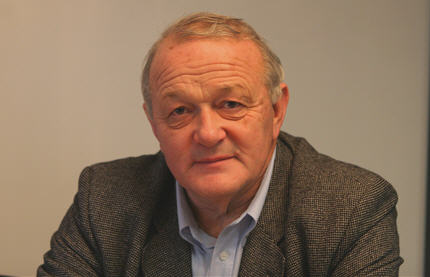
Source of photo : Wicked Local Winchester

Prof. Wilson was born in 1928 in Warwickshire, England - a long way in the shadow of the first World War, and just a year or two after John Logie Baird had given the first public demo of the television and English women over 21 years of age had been enfranchised (Source). Ever since his childhood, he loved riding a bicycle and made it an immediate hobby, even prime to that of his desire of being a pilot.

In a chapter of his upcoming Memoirs, he writes that it was on his ninth birthday in February 1937, that he was presented for the first time with a Hercules single speed boy's bicycle by his father. By the time he was 12, he was riding a 3 speed bike with 26 inch wheels and handlebars that could be reversed to the semi-dropped position. By today's standards, it would easily be called a 'clunker', but David looked forward to every journey on that machine. In fact, he was to ride it for the rest of his stay in Britain for almost a quarter century.

WWII came and went and despite having some difficult personal experiences to go through, he would be single handedly organizing bicycle tours across the country with his friends while studying at Bishop Vesey's Grammar School in Sutton Coldfield. After graduation, he was encouraged to take up mechanical engineering at the University of Birmingham. This was a course of action that he fell back on after being turned down for armed service in the Royal Navy due to the demobilization (Memoirs manuscript, Chapter 3).

He first crossed the Atlantic in 1953 after a PhD from University of Nottingham, working his way in the engine room of a cargo boat on the Glasgow-Montreal run. In 1955, he was awarded a post-doctoral Commonwealth-Fund fellowship for study and research at MIT and Harvard. He worked as a turbine engineer at Boeing. After returning to work in Britain in the gas-turbine industry, he taught for two years in Nigeria and worked briefly with the VSOs (the British precursor of the US Peace Corps) in the Cameroons. For six years before joining the MIT faculty in 1966, he was Technical Director and Vice President of Northern Research and Engineering Corporation (NREC) in London and in Massachusetts.

It was there while working for NREC that he got the bright idea of sponsoring a worldwide bicycle design competition. It worried him as he discovered that as opposed to England, fewer adults were actually riding bicycles in the US. From many unfavorable personal experiences, he was also concerned that there were glaring deficiencies in modern bicycles that made using them more dangerous than they should have been.

So a competition to design a better bike that would encourage more cycling was proposed. It was widely publicized in the magazine Engineering from 1967-1969 and on April 11, 1969 the winning design was picked. It would be a recumbent bicycle designed by W. Lydiard which, to David, would spur a deep interest in recumbent design. He designed one in 1970 and took it to MIT to show it to his students, after which he decided to ride it home through Cambridge. To his amazement, people cheered him as he went past. The comfort, speed and safety benefits of recumbents were a revelation to him and he openly supported the movement in his teachings, letters and interviews. This interest in human powered vehicles, together with the book Bicycling Science that he had published soon after, would lift him to the status of a bicycle guru.

As if that wasn't enough to keep him busy, he also worked as a consultant to Abiomed Inc. where he designed the centrifugal pump used in Abiocor, the world's first artificial heart. In 2001 a group of MIT people ("Ignite") joined him to form Wilson TurboPower Inc., a startup company part-owned by MIT, with the aim of developing and producing very-high-efficiency regenerative heat exchangers and gas turbines. Dave was chair of the board of Common Cause, Massachusetts, in 2003, a group trying to reintroduce democracy into Massachusetts politics. He also co-founded and took leadership of MASH (Massachusetts Action on Smoking and Health), a group that worked for nonsmokers' rights.

He happened to even tell me the following :

"I used to be a beekeeper and worked for a bee farmer in Perry, Iowa a while ago."

David has held a number of respected positions, everything from an engineer at Boeing, gas-turbine designer at Ruston & Hornsby (UK), to editor of Human Power Journal, Chair of the IAP Policy Committee, VP of NREC, to currently Emeritus Professor at MIT, and President and CTO of Wilson TurboPower Inc. See here for more on his research interests and honorary titles accumulated over the years.

In the next couple in installments of this series, I will present to you some of the details of the conversation I had with him. Everything from Bicycling Science to his views on the current energy crisis. So stay buzzed!


CONNECTED READINGS :

Conversations With David Gordon Wilson : Part I
Conversations With David Gordon Wilson : Part II
Conversations With David Gordon Wilson : Part III
Conversations With David Gordon Wilson : Part IV
Conversations With David Gordon Wilson : Part V


* * *

Thursday, April 23, 2009

27 Broken Thomson Seatposts & The Overtightening Syndrome

I wrote earlier about two recent incidents of Thomson Elite seatposts breaking during use, without any prior warning to the users (see here and here). I persisted in trying to extract as much information from Thomson about these happenings. Two phonecalls and an email to them never went through due to some obvious hindrances but just earlier this week, I was able to converse with David Parett, a manager and PR specialist at L.H Thomson Inc. Although they are a relatively small company, they seem to take pride in the fact that apart from the cycling side of the business, they're also a contract manufacturer designing and making parts for clients such as Boeing, Trane, Ford, Coors, Reliance Electric and so on. One can imagine that to gain the trust and business of such big name companies, you'd find it absolutely necessary to have sound manufacturing and quality control down on the floor.

One of the owners of the posts (with the broken head) sent it in to Thomson for analysis. When I talked to the user, he made the comment that he was 100% certain he used a torque wrench to tighten the bolts before use (documented here by 'Apacherider'. He reported he used a Park Tool torque wrench that only goes to 60 in-lbs which is the max torque recommended by Thomson for the bolts). However, the following is what Dave had to tell me from first impressions. Read it, and leave a comment if you would like to roundtable a discussion.


DIVOTS IN THE SEATPOST CRADLE

Dave : "There is no question that this failure was related to torque. This was easy to see as when I got the broken post, two divots caused by the bottom clamp had formed in the cradle of the post. We know how much torque that takes, and it is a big number. The user may feel they torqued it properly but there is ample evidence that is not true. I think most parts will fail if abused in such a manner. Imagine overtorqued handlebars, stripped pedal cleat bolts, etc. Or think of a car. If you torqued a sparkplug to 3 times the suggested value,what do you think would happen? We know from testing here at Thomson that there is no other way one could create those divots unless you overtightened the clamping bolts."


DISTORTED BOLT HEADS

Dave : "I also observed that the bolt heads are distorted. The bolts are grade 12.8. We know how much torque it requires to distort the bolt heads, and it is in excess of 125 inch pounds. Further, the metal shows no signs of material contamination, and the post is within spec as far as dimensions go. We have a lab here and we have examined the post. Moral of the story is, 2.5 to 3 times the recommended torque will break things."


ANODIZATION AND FATIGUE LIFE OF 7075-T6 AL

Dave : "I verified our anodic coating thickness. It is about .001" thick. Yes, anodizing cuts fatigue life, almost to 50% the original. But we engineer around that. Our post is heavier than it would otherwise have to be to deal with that. If you thinned it out, it would be susceptible to being crushed by clamping. Paint or powder coat cannot provide this kind of corrosion protection.The ridges may help with slipping, help keeps the finish from scratching and is also cosmetically appealing to some people. The finish changes near the radius at the seatpost head to help prevent stress riders."


ABOUT THE BROKEN BOLTING EAR AND THE BENDING FUSE

Dave : "The other post has not come back here as far as I know, but all our testing indicates it takes in excess of 600 pounds of force to cause an ear to fail and it would not fail in the manner it did. A brittle failure like that is again related to torque. Testing here shows that the original design idea is still valid. A riding event or accident results in a bend. All components of the top of the post, bolts, clamps, barrel nuts, ears are stronger in relation to the tube. If there is a big hit, the post will bend and the clamping mechanism will not fail. You can negate this by putting the ears under severe tension with torque."


SOURCING, STANDARDS AND QUALITY CONTROL

Dave : "The anodizing is done in Reading, PA, The Al ore is from Quebec, CA and the extrusion is done in Minnesota. All the fasteners are from Chicago and Cleveland. All of them are certified and rechecked by us. There are barrel nuts and bolts in receiving inspection right now, placed under a heavy load. If we observe any failures in the entire shipment, it will be tested and possibly rejected. I don't think anyone does that but us.

From filming riding, we have a series of in-house tests that were used in design and are still used on every lot of material. Bolts, washers and everything are checked for ultimate strength, fatigue life and corrosion resistance using a 500 hour salt spray test. We also had a German lab check our posts to the CEN standard. We think the CEN is a poorly designed test, but we passed it as well. The 500 hour salt spray test is run on samples from each anodize lot to verify quality. Further, we have a fatigue tester. We can put a post in it, set the bolts at the level the customer had them and create that failure. There just is no question of what happened after that.

We expect our products to last for 10 years in the field under normal conditions. If a customer experiences an issue, we replace the part for goodwill. My frustration with all this is there is not a single company out there that does 10% of what we do to check incoming material quality, 100% checks at each machining operation, and certification and testing of all components. Our bike parts are built to the same standards, in some cases higher, than the airplane parts we make."


ADDITIONAL RESOURCES :

Seatpost Clamp Mechanics
Torque & Tightening Components : Perspectives from Easton R&D (pdf)
Thomson Elite Setback Seatpost Failure
Thomson Elite Bolting Ear Failure
Torque Wrenches, Their Types and History by Charlie Zarek
Torque Wrenches - How Good Are They?


* * *

Tuesday, April 21, 2009

5 A Tribute To Spandex


I gave my groin to Spandex
A fruit of Dupont's 'projects'.
I need not dread,
wearing a rubber tread,
for now I have my Spandex!

I gave my groin to Spandex
A fruit of Dupont's 'projects'.
Miles in peace,
minus the woolly crease.
O' that's a ride in Spandex!

I gave my groin to Spandex,
A fruit of Dupont's 'projects'.
Neither oil or sweat,
nor detergent has met
the destruction of my Spandex.

I gave my groin to Spandex
A fruit of Dupont's 'projects'.
A godsend elastane.
Mind you, its a polyurethane!
Well... I just call it Spandex.


Did You Know ?

So valuable was DuPont's spandex technology (1962) that it was the subject of an extortion attempt in 1989. Five DuPont employees, all from DuPont's Lycra spandex plant in Mercedes, Argentina, tried to play a fast-and-loose game. They stole proprietary production technology documents and attempted to extract $10 million from DuPont for their safe return. After a globe-trotting chase that included stops in Wilmington, Del.; Milan, Italy; and Geneva, Switzerland, the Federal Bureau of Investigation and Swiss police finally staged a sting to exchange a bogus check for the documents. The operation went awry, but the Swiss police ended up nabbing the extortionists on the rebound in a Geneva parking lot. [Source]

Here's a newspaper clipping of that story in the St. Petersburg Times and one here in NY Times way back in 1989.

Besides Lycra
®, DuPont is also credited with discovering Kevlar® fiber in 1965 and Teflon® earlier in 1938. These materials are increasingly used in the bicycles today to make friction decreasing cables for flexible and supposedly crisper shifting, and as a puncture preventive component in bicycle tires. The Specialized S-Works helmet also licenses Kevlar to employ it as a structural base reinforcement.

Where the heck would we be without DuPont?

* * *

Friday, April 17, 2009

7 Famous Cycling Personalities as Babies

PHIL LIGGETT & PAUL SHERWIN

Charles Liggett and Paul Sherwin were both attracted to television from infancy. On one of these occasions watching the idiot box, Charlie gave a piece of his mind to Paul for distracting him from the commentary ahead. It is now believed that Charlie changed his passport name to 'Phil Liggett' so that Paul wouldn't recognize him as his childhood attacker, that left him challenged with just nine fingers.


FAST FREDDY

It is no folklore that Freddy was born fast. He displayed his ability for taking risks, and sensing danger at an early age. His parents decided to refer him to the United States Cycling Federation to further develop his talents and put some more sense into it.


SIR CHRIS HOY


From old video archives, here's Sir Hoy some three decades ago, quite unlike the macho British Olympian that he is today. One theory put forward by biology experts suggests it wasn't the mimics of his father that cracked him up, but infact the rapid development of his piston like leg muscles that tickled him every now and then.


TOM BOONEN


For starters, Tomekke's experiments with snort isn't anything new. Adorable videos of the Belgian superstar in pampers reveal that he was just as stoned then as he is now.


THOR HUSHOVD


This Norwegian God of thunder was a force to reckon with, ever since His Highness stepped foot on the planet. I had to go grab a glass of water and gulp it down hard to gain some strength to watch....


DAVIDE REBELLIN

Rebellin consistently delivered in races, but he was a quiet man, never reveling in the excesses that his contemporaries plunged into. However, our man who captured this video of him back in the days just shows the amount of change that hard, unforgiving cycling can bring upon someone. The sheer charisma this man had back then, you know.....errr....


ROGER HAMMOND

Hammond had some prodigious childhood abilities, one among which was the power to foretell the future. Hammond's family said that a 12 month old 'Roggie' would literally "simulate" how fast he would go at the World Championships in Athens in 2004. It is now held that he needed a little more firepower in his predictions to have landed a podium spot.


IVAN DOMINGUEZ

Ivan, it seems, was a small, chubby chap. He was constantly bullied by his cousins and members of his extended family into doing things they would never do....but which would nevertheless be awesome fun to watch. Note : Video has been removed but it can be watched on Youtube here.


Texas Baby Eating Lime - The funniest movie is here. Find it


CARLOS SASTRE

Sastre was a noisy brat, compared to the composed man that he is now. All too often, he would resort to a corner of his baby's room, in the remoteness akin to that of a lone climber breaking away on the Alpe d'Huez. Then, he would start one of his Spanish canciones that made absolutely no sense and sounded more like an adult animal in labor. Researchers around the world are now trying to decode what he tried to say.


THE SCHLECK BROTHERS


Even drug dealers have an innocent, adorable childhood. Frank was always the temperamental one, but Andy was on his back at all times, chilling out in his brother's shadow and requiring little maintenance at all.


CERVELO TESTTEAM STAFF MECHANICS

We found a disturbingly funny set of videos in the pile of junk. These guys would later be turning nuts and bolts for one of best teams in the world. Let's hope one of them decides not to drop a monkey wrench in the party.


JEAN MARIE LEBLANC

Some say leaders are made. We say leaders are BORN. Certainly, handling the immense logistical challenges of the biggest sport event needs something like Leblanc's innate traits of the oratory, diplomacy, and corruption which went on to make him one of the best Managers of the Tour de France. This is by far our best find from the archives.

Thursday, April 16, 2009

10 Thomson Elite Setback Post Failure


Readers will note that I wrote about a Thomson seatpost bolting ear failure a few weeks back. 4 days ago, another Thomson Elite setback post was involved in an incident out on the field. The product owner reported that he had a close brush with an "aluminum colonoscopy".

Facts :

  • 31.6mm OD, 410mm total length with 5/8 inch or 16mm of setback.
  • Used on a Cannondale 29'er (offroad XC bike).
  • Made in USA with 7075-T6 Al alloy and anodized black to a glazing finish.
  • Post is machined and the head and post body are integral units.
  • User owned the product for 10 months.
  • Approx 2000 miles of use, mostly on pavement, some on fireroad and some singletrack.
  • Never been dropped, wrecked, knock over or even clamped in a repair stand.
  • Cannondale saddlebag was velcro strapped around the rails and post with nothing sharp in it contacting the post.
  • Owner weight = 190-200lbs. No indication of a weight limit in the instruction sheet.
  • Owner followed Thomson instruction sheet for installation and use "to the letter".
  • Saddle was installed far back on the rails beyond neutral position and the result was that the post was clamped on the forward 1/3 of the usable rail portion.
  • Owner was immediately replaced with a new post by Thomson over the Easter weekend.

Macroscopic features of the fatigue and final static rupture are easy to observe in the broken sample. The fatigue crack originated on the front side of the post body, propagated with loading cycles thus smoothing out the surface as it progressed. The static failure happened at the back end of the post, and these areas have a rougher appearance.


In this picture that shows the underside of the head, it appears that there was one 'dominant' fatigue crack on the tension side of the post that initiated this process. Observe the darker 'slit' near the arrow.


What's bothering me at this point are the following :

1) Thomson's marketing materials online claim that at around 250 in-lbs of torque on the post, the product will start yield phase and bend at the seat tube clamp. There is no evidence of any bending, either on the rails, or on the clamping site, from the original photos.

2) An elliptical bore leaves more material on the front and back ends of the post, in order to withstand bending stresses. Material is removed from the inner sides of the bore to reportedly, save 30-40 grams of weight. This structural design did not prevent this failure.

3) Does anodization reduce the fatigue life of this seatpost? In other words, did Thomson test the seatpost in post-anodized state? Anodizing significantly reduces the fatigue strength of Al alloys. As Al bends elastically, the anodized surface cracks and the crack grows into the body of the Al. Anodized aluminum only worsens the fatigue limitations of Al. You can't bend anodized Al significantly without cracking it. The cracks that develop on the coating are stress risers and potential sources for fatigue failure in the substrate metal.

4) Additionally, if one closely inspects the outer surface of the seatpost, there are grooves all along the length of the post. This may not be seen at first glance but can be felt with the hand. I'm not sure what functional purpose this serves, other than aesthetics. Is this done to reduce seat post slippage while clamped and loaded? Whether these features have any role to play in the breakage is something to be further studied.


If you use an Elite or a Masterpiece seatpost, it won't hurt to periodically inspect what's going on with the post. This type of failure is very dangerous largely because it is hidden and away from the sight of the user, happening well below and under the saddle. I hope Thomson takes this seriously and undertakes a root cause analysis before any one gets hurt. While replacing the product for free addresses people's concerns to some extent, it still doesn't take care of the problem.


* * *

Tuesday, April 14, 2009

16 What Is Your Pedaling Style And Technique?

Readers, let's talk pedaling in this post. It would be great to have all your input as comments.

Basically, what I'm wondering is what each of your pedaling techniques are like. What do you think of when you pedal? Is there a rhythm you follow? Do you count in your mind? Do you sync it with your favorite musical tune that's stuck in your head? Technically, do you believe there is something in your pedaling style that makes it efficient? Did someone teach you this style, telling you that its better? Do you follow a book? Or do you plainly just don't give a damn?

David Kina is a Cat 3 road racer from East Aurora, NY. He's also good friend of mine and wrote me a small thesis on his pedaling style, which you can read below. My response comes after his writeup and it gets really interesting towards the end!!

Oh...and don't forget to share your feelings and thoughts on your personal pedaling style!!


HOW DAVE PEDALS - THE EDDIE BORYSEWICZ TECHNIQUE


Ron,

Here is a topic that I think would be great for your blog because I want to learn about other rider's pedaling techniques. Perhaps you could have some physics analysis to add to this topic? I want to know what other racers do because my riding may not be fast but there are many faster riders who may have better hints.

When I first started racing in 2005 I was known for time trialing, breaking away, and chasing in a pursuit or time trial style (I still do favor this type of riding as I broke away in a local training crit and won last year, and I was congratulated on my pursuit abilities at a track). In 2005, I used some pedaling technique advice from an old school coach Eddie Borysewicz. He said in his book to do a soft pedal revolution per leg every 5 pedal strokes. So pedal stroke 1 right leg, 2 left, 3 right, 4 left, 5 rest right, 1 left, 2 right, 3 left, 4 right, 5 rest left. 5 is an odd number of pedal strokes so a racer rests the right leg every 10 pedal strokes and the left leg gets to rest every other 10 pedal strokes. This coach (along with a coaching book of yours that I read in Tim's van in 2007 on the way to Philly also advises using a rhythmic resting technique) says that this amount of rest adds up.

Borysewicz gives some reasoning behind this according to bio-mechanics.The tension of muscles from pedaling causes blood to be restricted to muscles. Hence, relieving that tension for every 5th pedal stroke allows more blood flow to the resting leg.

Borysewicz also said that Jaques Anquetil and other professionals used this technique.

From left - 'Eddie B' and Greg Lemond (Photo Courtesy : Mitchell Clinton)

From my experiences, this pedaling can be tough to learn. I can only count some much to 5 before I start getting bored and need to listen to some music or think about other stuff. So this rhythm needs to become automatic. I have had success with this in the past. The best music that matches this rhythm is Take Five by the Dave Brubeck quartet (shown at the end of post) since the meter is in 5/4.

I have told another racing friend that I used this technique and they did not seem to quite understand that a constant rpm would be used. They asked other racers that have been around for awhile and did not seem to get any indication that this is a popular thing to do. Perhaps this does not seem practical because the 5th pedal strokes are basically like "dead zones" in a pedal stroke and all the rave is to eliminate those?

Note that I don't use this on any uphill where I would be going slower than about 15-20 miles per hour. I do follow this technique only at speeds faster than 20 mph on flats.


- DAVE KINA


The Dave Brubeck Quartet - Dave Kina's musical recommendation to follow Eddie B's pedaling technique


MY RESPONSE :

DEAR DAVE,


Bicycle pedaling motion is an example of what is known in physics as periodic or simple harmonic motion (SHM).


If your preferred cadence is 97 revolutions per minute, you pedal 97/60 = 1.61 revolutions / sec.

Frequency (f) is the number of occurrences of a repeating event per unit time. Here, your frequency = 1.61 revolutions /sec.

Time period (T) is the duration (in seconds) of one cycle in a repeating event, so it is the reciprocal of frequency. T = 1/1.61 = 0.62 seconds / revolution.

Suppose you followed Eddie B's technique of pedaling by starting out with the left leg, then your left leg rests on every odd stroke divisible by 5 and your right leg rests on every even stroke divisible by 10 (if you started with right, just turn this rule around).

97 RPM (of a single crank) has 194 total pedal strokes (of both cranks). So after 194 pedal strokes and 1 min duration :


Total Time Of Rest To Left Leg = (1+[(185-5)/10]) x 0.62 secs = 11.78 seconds
Total Time Of Rest To Right Leg = (190/10) x 0.62 secs = 11.78 seconds


NOTE : We added a "1" to the equation for the left leg because the left leg rests once in the first 5 pedal strokes. From then on, it rests for every 10th stroke. 185 is the last multiple of 5 before 194 where a left leg rested. We subtract 5 from it because we already accounted for the first 5 pedal strokes by adding the "1" in the beginning.

You can find out the total time of rest for any nth pedal stroke by writing a small and neat computer program through some logic. Writing that logic is upto the programmer to make the best use of computer resources to yield an answer in the shortest time. That discussion is for another time.


Getting back to the problem, if you rode a 25 mile flat course (40K) at an average speed of 25 miles/hour, your time taken to complete it is 1 hour = 60 minutes. Total pedal strokes = 194 x 60 = 11640.


Total Time Of Rest To Left Leg = 11.78 seconds rest/minute x 60 minutes = 706.8 seconds/hr
Total Time Of Rest To Right Leg = 11.78 seconds rest/ minute x 60 minutes = 706.8 seconds/hr


All in all, you rest each leg 706.8 seconds/hr or 11.78 minutes/hr in the 40K TT. That's a total of 23.56 minutes/hr of leg rest!! If this is the case, Eddie B is a genius. But you'll have to perform this like a flawless robot to get it exactly right.

I doubt any human can achieve this ideally, since the body cannot calibrate alternating "rest" to this exactness for 1 hour. I don't believe the human muscle, the human brain and the various motor neurons in the nervous system can allow for this.

If one were to study your muscle activation patterns using Electromyography (EMG), would your resting leg on every 10th stroke be "really" resting? Will the muscle cells of the resting leg give out zero action potential readings during circular movement? Or is this 'resting leg' technique just a perception of rest? If the resting leg muscles are really being activated as shown by EMG, that would mean that calcium ions are interacting with the myofibrils of the muscle fiber to induce contraction via sliding filament mechanism. This process uses ATP which is the cellular energy currency in the human body. This would then mean that the muscle is not in a state of energy balance at all as it is producing net ATP to give this "oomph" to the muscle. Hence it is not technically at "rest". [See : Exercise Physiology : Basis Of Human Movement In Health and Disease by Stanley P. Brown, Wayne C. Miller and Jane M. Eason]

Something to think about....

Eddie also mentioned that Jacques Anquetil used this technique. Let's say I'm not ready to believe it for now. :)


ADDITIONAL RESOURCES :

What Muscles Are You Using To Pedal?
Cycling Biomechanics : CONI Manual
Myth And Science In Cycling : Crank Length And Pedaling Technique (University of Utah)


* * *